Overview
In this article, we will review the Prospect Opportunity Score Report, which utilizes a machine learning algorithm to predict a prospect’s likelihood of moving in.
Prospect Opportunity Score Report
How to use the Prospect Opportunity Score Report
A prospect with a higher score is more likely to become a resident.
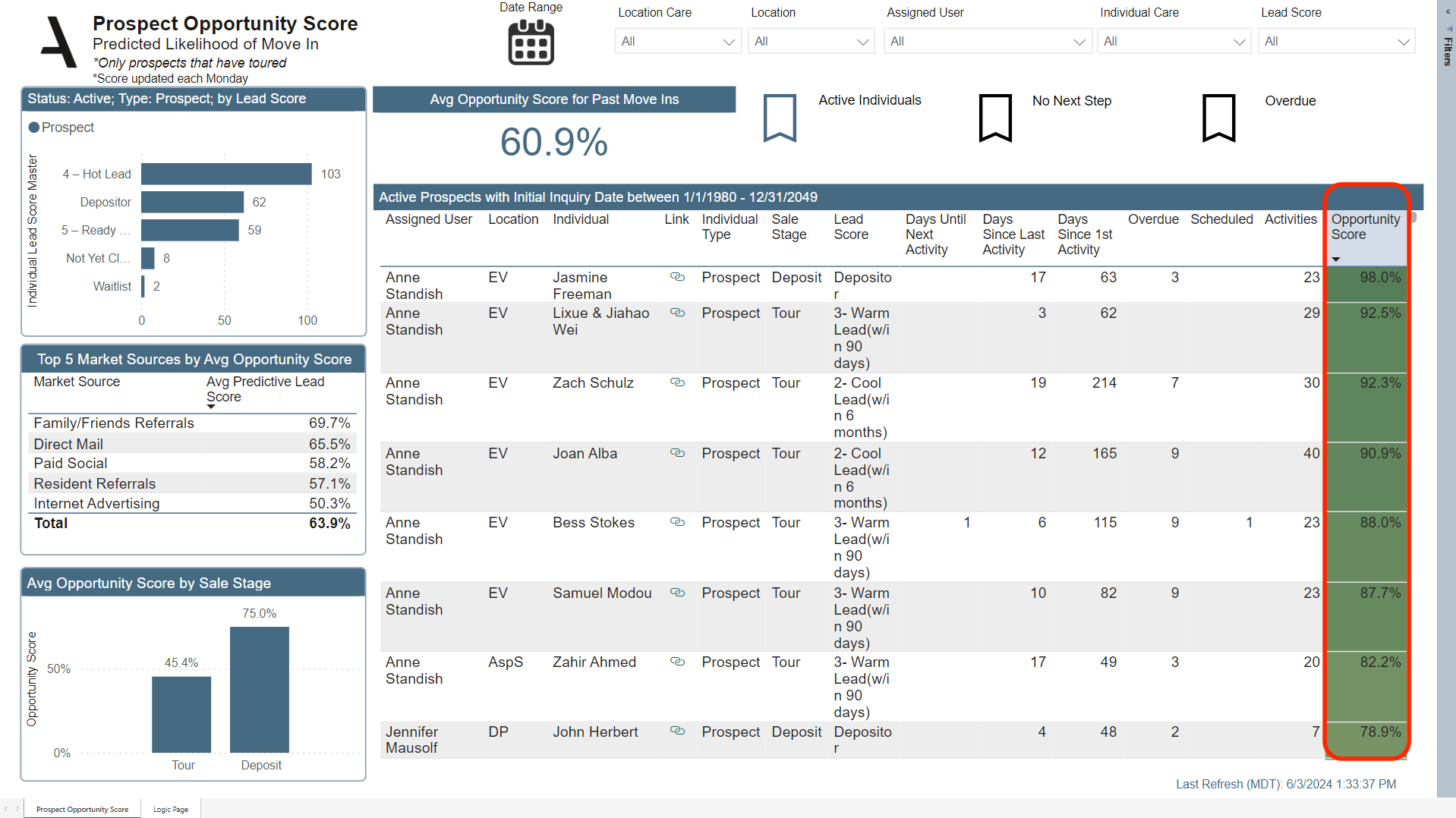
The prospect opportunity score report provides a list of your prospects ranked by their opportunity score. Prospects are assigned a score from 0 to 100 with higher scores meaning a higher likelihood of move-in. Your highest ranked prospects are important to track and continue working.
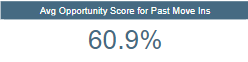
Across all communities, the average score for residents who move in is 69.2. The average score for prospects who eventually become lost leads is 15.6. The report includes the average opportunity score for your company or community. You can use this average as a benchmark to judge your current leads.
Understanding what makes a Lead Score High or Low
High scores. People with high opportunity scores usually have multiple face-to-face activities. Generally, they have had at least one face-to-face activity in the past couple of months. They may have called or emailed you recently. They may have heard about your community from someone who knows your community well, like a current resident, staff member, or a professional. All of these factors help increase an opportunity score.
Low scores. Prospects with low opportunity scores have fewer face-to-face activities. For some prospects, they may be hard to get on the phone and unlikely to call back. It may have been several months since they last came into your community. They may have come from a lead aggregator or another internet source. You might have emailed them several times but gotten no response. Any of these factors could contribute to a lower opportunity score.
Scores can grow as more activities are recorded. Some prospects have low opportunity scores because they are early in the sales process and have not had many activities recorded. As you continue working with these prospects and continue recording activities, their opportunity scores will update.
More detailed information about how the scores are calculated is available in the documentation section titled Prospect Opportunity Scores Calculation.
Opportunity Scores and how Close Prospects are to Move-in.
The prospect opportunity column helps you understand which of your leads are most likely to move-in. As the scores update over time, your hottest leads will continue to change. Prospects’ scores will continue to change as you record more sales activities, showing you their likelihood of move-in at any given time.
Face-to-face Interactions Have a Big Impact
Face-to-face interactions with prospects, such as tours, appointments, and home visits are all high-value activities. These face-to-face interactions have strong positive impacts on opportunity scores. In-bound communications from prospects also increase opportunity scores. Engaging prospects in these activities raises their scores and increases their likelihood of conversion.
FAQ
How does this report help me as a leasing counselor?
- Have you ever looked at your list of prospects and felt a little lost for who to call first? Instead of subjectively judging a prospect’s readiness, prospect opportunity scoring uses the power of machine learning to help you focus on the prospects who are the most likely to become residents.
How can I make sure my opportunity scores are accurate?
- The prospect opportunity scoring model has a high level of accuracy overall. A prospect’s opportunity score is based on the data that is entered in their profile. Tracking your data accurately is extremely important for having accurate scores. The activities that the model counts are based on activity type. If you get a deposit but mark it as a call out, the model will count it as a call out. If you have any questions about how to track your data, please contact us.
How does a prospect’s score change over time?
- A prospect’s score can go up or down. As you record sales activities for a prospect, the model will take them into account. This means for a prospect you are nurturing with high impact sales activities like face-to-face interactions, the score will increase to reflect those activities. However, if a prospect becomes unresponsive and hasn’t had any activities for some time, the opportunity score will decline as that lead cools down. Future reporting plans to include history of a prospect’s score.
How does the model itself change over time?
- The model will continue to learn as leasing counselors record more data in the CRM. Aline’s data science team reviews model performance routinely. We will report any meaningful shift in methodology.
What is the average opportunity score for prospects who move in? What is the average opportunity score for lost leads?
- The average opportunity score for prospects who move in is 0.69, whereas the average opportunity score for lost leads is 0.15. This difference shows that the model is good at distinguishing between the two outcomes.
What security measures are in place to ensure confidentiality?
- Although the Aline data science team developed the model using the aggregated data from 250,000 prospects across different communities on our platform, scores for your prospects are only available to your company. These scores are as confidential as the rest of your data.
Was this article helpful?
That’s Great!
Thank you for your feedback
Sorry! We couldn't be helpful
Thank you for your feedback
Feedback sent
We appreciate your effort and will try to fix the article